
How to Write a Marriage Biodata for a Boy vs. a Girl
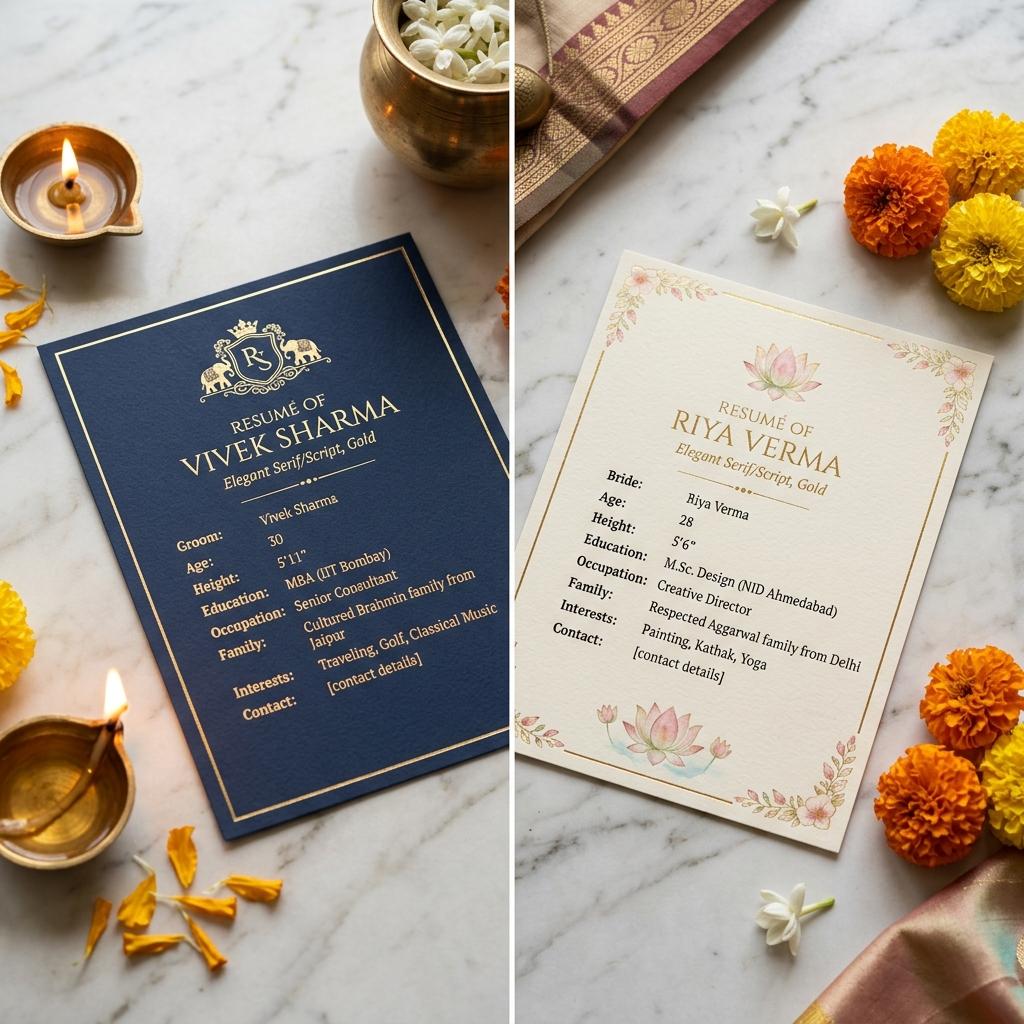
Standard biodata advice tells you what to write, but it completely ignores who is reading it. And the reality is, families read a boy's career section very differently than a girl's.
When families read a biodata, they look at the exact same sections—education, career, family background, and hobbies. Yet, conditioned by culture and changing modern realities, they often read those sections looking for entirely different signals. Understanding these subtleties does not mean conforming to outdated expectations or letting go of your modern values. Instead, it means communicating your life clearly so you attract matches who truly align with the life you want to build.
In the Indian matrimonial landscape, the biodata often serves as the very first introduction between two families. While a Saat Vachan biodata template gives you the perfect structure, the words you fill into that structure carry the heavy responsibility of setting expectations. If you write your biodata without considering who is reading it, you risk prolonged conversations with matches that fundamentally misunderstand your lifestyle.
The Unspoken Questions Are Different
While the fields on the template look identical, the anxieties of the parents reading them are vastly different. Traditionally, families reading a boy’s biodata are scanning for a foundation of stability. They are looking for a long-term career trajectory, financial independence, and his readiness to manage the responsibilities of a household. When reading a girl’s biodata, families are often looking for adaptability, alignment in core values, and how she balances her professional aspirations with family life.
For example, a boy might proactively mention his preferred living arrangement. Stating clearly that he intends to settle in a nuclear setup in Bangalore, or alternatively, that he lives in a joint family in Mumbai, helps alleviate immediate concerns about relocation and family dynamics.
Meanwhile, a girl might explicitly state her intention to pursue her full-time career in finance post-marriage. If she comes from a business family but wants to focus on her corporate career, stating this clearly is crucial. Addressing these unspoken questions head-on filters out incompatible matches before the first meeting, saving both families immense emotional energy.
Framing the Career Journey
Today, career details are equally important for both genders, but how you frame them can serve different purposes and reassure different parental anxieties. For a boy, the career section is often interpreted as a timeline of stability. Highlighting steady academic progression or a recent step up in a corporate role demonstrates reliability and foresight.
For a girl, the career section often signals her independence and daily routine, heavily influencing lifestyle compatibility. Consider the difference in presentation: A boy might highlight his recent promotion to Senior Software Engineer to emphasize his financial stability and a clear path forward in his industry. He might add his willingness to travel for work if it brings growth.
A girl, on the other hand, might highlight her role as a clinical architect to communicate not just her professional success, but a demanding, heavily structured work schedule that requires a highly supportive partner. She might mention that her profession requires occasional weekend shifts. Both descriptions are deeply honest, but they are speaking to different priorities of the reader. Framing your career realistically prevents friction when families eventually discuss what daily routines will look like after marriage.
Let the Expectations Section Do the Heavy Lifting
The "Partner Preferences" or "Expectations" section is where the most meaningful filtering happens in the entire document. If there is a noticeable difference between a boy’s and a girl’s biodata, it should be most visible right here. Generic phrases like "looking for an understanding partner" or "seeking a family-oriented match" waste valuable space and attract generic responses.
Instead of vague wishes, be hyper-specific about your lifestyle requirements. A boy in a demanding entrepreneurial field might write: "Seeking a partner who understands the erratic hours of building a startup and values financial independence."
A girl navigating a dual-career ambition might specify: "Looking for an equal partner in managing household responsibilities while supporting each other's career goals." If she intends to stay close to her parents to support them, this is the section to gently note: "Seeking a partner who respects my ongoing responsibilities toward my parents." This level of clarity acts as a protective boundary, ensuring you only receive interest from families who respect your boundaries.
Your Personal Action Plan
Whether you are writing a biodata for a son, a daughter, or drafting your very own, review the document against this specific checklist before finalizing:
- Anticipate the reader's worry: If you are a girl with a demanding monthly travel schedule, mention it clearly in your profile summary. If you are a boy with the intention to move abroad for a master's degree within two years, state the timeline directly.
- Remove the generic phrases: Replace cliché terms like "simple and family-oriented" with what that actually means in your daily life. Does "family-oriented" mean you expect weekend dinner at home, or does it mean living in a joint household? Clarify it.
- Be specific in expectations: List at least one non-negotiable lifestyle requirement in your partner preferences. Make it something that a poorly aligned match would instantly disqualify themselves over.
- Maintain balance: Ensure your biodata isn't just a rigid list of demands (in the expectations section) or purely a corporate resume (in the career section). Add warm, human elements to your hobbies and interests. Let them know you love Sunday morning filter coffee, not just that you hold an MBA.
Your biodata is more than ink on paper or a digital PDF sent over WhatsApp. It’s the very first hello in a story that could last a lifetime. Take your time, lean into your true authenticity, and remember that the right biodata doesn't just attract more matches—it carefully filters them, attracting only the right one.